
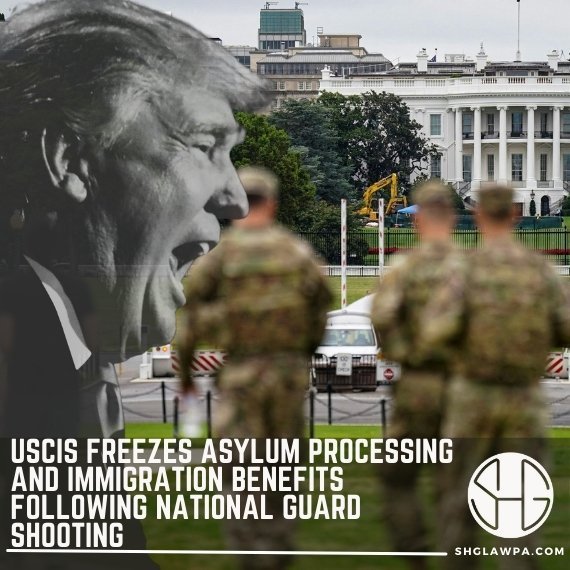
On November 26, 2025, two members of the West Virginia National Guard, deployed to Washington, D.C., as part of a controversial federal deployment ordered by President Trump without local consent, were shot near the White House. Just one week earlier, a federal judge had ruled the deployment unlawful, though the ruling was stayed pending appeal. One of the Guardsmen, 20-year-old Sarah Beckstrom, died from her wounds. The other, 24-year-old Andrew Wolfe, remains in critical condition, fighting for his life.
The suspect, identified as Rahmanullah Lakanwal, a 29-year-old Afghan national who entered the United States through the Operation Allies Welcome program, has been arrested and formally charged with first-degree murder, two counts of assault with intent to kill, and possession of a firearm during a crime of violence. Lakanwal appeared remotely before a judge from his hospital bed, where he is recovering from gunshot wounds suffered when another National Guard member shot him during the incident. Through a court-appointed attorney and Pashtu interpreter, he pleaded not guilty to all charges.
Before coming to the United States, Lakanwal served for over a decade in Afghanistan’s elite counterterrorism units—specifically, a CIA-trained “Zero Unit” that conducted high-risk operations against Taliban commanders alongside U.S. Special Forces. He was evacuated by U.S. military forces in August 2021 following the fall of Kabul and arrived in the United States in September 2021 under humanitarian parole as part of Operation Allies Welcome. He applied for asylum in 2024, and his application was granted in April 2025 during the Trump administration.
After resettling in Bellingham, Washington, with his wife and five children, Lakanwal struggled significantly to adapt to life in the United States. Volunteers who worked with him reported that while he initially appeared hopeful and engaged with his family and community, by 2023 he had become increasingly isolated, unable to maintain steady employment, and appeared to be in a deepening personal crisis. His work permit had expired, leaving him under financial stress. Community members and volunteers attempted to connect him with professional refugee support services but received limited response. Some reports indicate he may have been suffering from post-traumatic stress disorder stemming from his years of combat in Afghanistan. Investigators are examining whether the recent death of an Afghan commander he had worked with and revered may have contributed to his deteriorating mental state. Authorities have not disclosed a motive for the shooting. The FBI is investigating the incident as a potential act of international terrorism, though no terrorism-related charges have been filed, and no specific evidence tying Lakanwal to any terrorist organization has been publicly released.
This tragic incident led to a fast and sweeping shift in U.S. immigration procedures. On December 2, 2025, just days after the shooting, U.S. Citizenship and Immigration Services issued Policy Memorandum PM-602-0192, directing a comprehensive hold and review of asylum applications and immigration benefits for individuals from designated high-risk countries. The response has been immediate and far-reaching.
USCIS has placed a hold on all asylum applications across the country, regardless of the applicant’s country of nationality. This means no interviews, no decisions, no movement at all while the agency conducts a system-wide review. USCIS Director Joseph B. Edlow announced that asylum decisions will remain on hold “until we can ensure that every alien is vetted and screened to the maximum degree possible.”
At the same time, USCIS instructed its field offices to double down on vetting across the board. Officers must now conduct a comprehensive re-review of any immigration benefit filed by people from the 19 “high-risk” countries listed in Presidential Proclamation 10949. That includes adjustment applications, naturalization-related filings, green card renewals, travel documents—essentially any request filed by someone who lists one of those countries as their birth country or citizenship. The affected countries are Afghanistan, Burma (Myanmar), Chad, Republic of the Congo, Equatorial Guinea, Eritrea, Haiti, Iran, Libya, Somalia, Sudan, Yemen, Burundi, Cuba, Laos, Sierra Leone, Togo, Turkmenistan, and Venezuela.
The memo also directs officers to reexamine already-approved benefits for individuals from those same countries who entered the United States on or after January 20, 2021. The review can include mandatory interviews or even re-interviews, and officers are specifically told they may not waive them. Every case must go through an individualized assessment focused on identity, national-security indicators, and any potential public-safety concerns.
Further, visa processing for Afghan nationals, particularly those who assisted U.S. forces under earlier resettlement efforts, has been halted. The administration says this is part of a broader effort to tighten vetting and ensure national-security risks are addressed.
The United States is also expanding its vetting process for highly skilled H-1B visa applicants to include more social media checks, as applicants working in fields like misinformation and disinformation will face enhanced scrutiny. The US Department of State said that all H-1B applicants and their dependents must make all their social media profiles public to ensure they “do not intend to harm Americans and our national interests.” As part of its enhanced checks, the State Department will also scrutinize H-1B applications for work in fields that promote the censorship of “free speech,” according to an internal cable. The cable orders consular staff to review applicants’ LinkedIn and employment history for any work in “misinformation, disinformation, content moderation, fact-checking, compliance and online safety” or “social media or financial services companies involved in the suppression of protected expression.” The new rules apply to any accompanying family members and applicants renewing their H-1B visa.
USCIS says it will take up to 90 days to build a priority list for interviews, re-interviews, and potential referrals to law-enforcement partners, but the adjudication hold will stay in place until the agency formally lifts it through a future directive. Any requests to lift the hold due to litigation or other extraordinary circumstances must receive approval from the USCIS Director or Deputy Director.
For applicants and their attorneys, the result is an immediate slowdown, especially for anyone with ties to one of the 19 countries identified in the proclamation. The agency acknowledges that these delays may be “significant,” but says that the review is necessary as part of its national-security responsibilities.
What does this mean in practical terms? Clients from the 19 affected countries should expect indefinite delays, whether they have pending asylum applications, green-card petitions, naturalization filings, or other benefit requests. Even individuals whose immigration benefits were previously granted may now be subject to re-interview or re-review, potentially resulting in additional delays, requests for more documentation, or even denials if the re-evaluation uncovers issues. Asylum applicants from any country, not only those 19, face a full pause of adjudication. No interviews or decisions will be issued while USCIS undertakes its internal review.
For clients working under tight deadlines, such as visa expirations, travel-document renewals, or employment-based status changes, this could pose significant legal and practical challenges. Clients should review their records carefully, ensure all documentation is up to date, and prepare for possible follow-up from USCIS, especially identity documents, travel history, and any information that supports eligibility and security compliance. Immigration attorneys should assess which clients may be prioritized when USCIS re-opens processing and advise accordingly on strategy and risk.
But we shouldn’t lose hope. Despite the sweeping freeze and re-review mandate, the policy does not automatically mean the end of every pending or approved case. USCIS guidance indicates that each file will receive individualized review. For clients with strong documentation, lawful status, and no disqualifying factors, the re-evaluation could ultimately confirm eligibility and allow adjudication to resume. In other words, the freeze is a procedural barrier, not a categorical one.
This is being described as a “temporary measure” tied to a security review, which means there is still a path for normal processing to resume once the government completes its vetting. For many clients, that could mean a return to their original timeline, albeit delayed. The challenge now is navigating an indefinite pause with no clear end date, while preparing for the possibility that cases will eventually move forward once the administration’s security review is complete.